


Construction and real estate leaders closely watch labor, materials, schedules, overhead, and project margins. But one cost can quietly erode profitability: employee turnover.
When an experienced superintendent, project manager, estimator, or property manager leaves, the cost extends well beyond recruiting a replacement. Projects can lose momentum, workloads shift to remaining employees, client relationships may be disrupted, and valuable institutional knowledge can walk out the door.
For businesses operating on tight margins, those disruptions can quickly become a financial issue, not just an HR issue.
What Can Turnover Mean for a Project Margin?
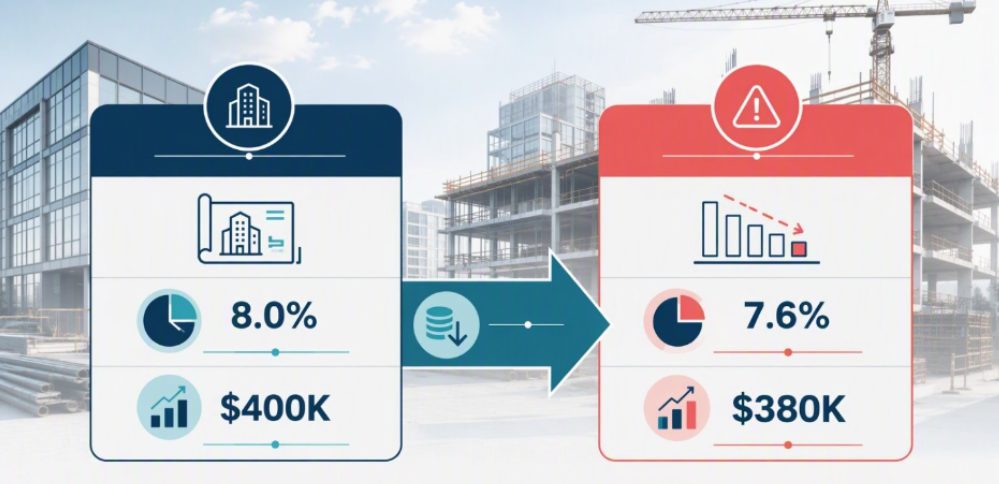
Consider a $5 million construction project with an expected gross margin of 8%. The project is expected to produce $400,000 in gross profit. If a project manager leaves, the transition could create additional project costs, such as overtime or temporary coverage. Schedule-related costs or rework may also arise if the staffing disruption contributes to them.
For illustration only, assume those incremental project-level costs total $20,000. This is a hypothetical assumption, not an industry benchmark. If project revenue remains $5 million, gross profit falls to $380,000 and gross margin to 7.6%. That is a 5% reduction in expected gross profit and a 0.4 percentage-point reduction in gross margin. Recruiting, onboarding, and other transition costs not charged to the project would be additional business expenses.
Real estate organizations may face similar risks. A gap in experienced property management coverage could slow maintenance coordination or tenant communication and complicate lease-renewal or vendor handoffs. If those disruptions affect tenant satisfaction, renewals, or vacancy, they may put pressure on property performance and net operating income.
Four Ways to Reduce the Risk
Turnover is inevitable, but organizations can reduce its impact by identifying workforce risks before key employees leave.
1. Identify the Roles Most Critical to Business Continuity
Some employees have an outsized influence on project execution, client relationships, and operational performance. Understanding where that dependence exists is the first step toward reducing risk.
Start with four questions:
- If this person left on Friday, who would step in on Monday?
- Is there a successor in development, or is the organization relying on an unplanned transition?
- Is critical know-how written down, or does it live in one person’s head?
- Which client, owner, tenant, or vendor relationships could be at risk if this employee left?
Identifying these vulnerabilities early allows leaders to prioritize cross-training, knowledge transfer, and succession planning before a departure disrupts operations.
2. Understand Why Key Employees Stay
Understanding what motivates experienced employees to stay can help leaders address retention risks proactively rather than repeatedly absorbing the cost of replacing critical talent.
3. Make Knowledge Transfer Routine
Knowledge transfer shouldn’t begin when someone resigns. Document and share critical projects, property, client, vendor, and operational information through established handoff procedures, cross-training, mentorship, and succession planning.
4. Measure Turnover’s Business Impact
Connect turnover data to operational and financial performance. Track indicators such as:
- Turnover in critical roles
- Time to fill vacancies
- Recruiting and onboarding costs
- Overtime related to vacancies
- Project or property disruptions
- Repeat turnover within specific teams
For example, recurring project manager turnover that contributes to overtime, delays, or margin pressure gives leadership a clear reason to address retention.
When leaders can connect staffing disruptions to financial performance, they can make more informed decisions about where to invest in retention, leadership development, and succession planning.
A retention initiative that initially looks like an added expense may prove to be a valuable investment when weighed against the financial impact of repeatedly losing experienced employees.
Is Turnover Creating Financial Risk in Your Organization?
Understanding the true cost of turnover starts with asking the right questions:
- Do we know which roles have the greatest impact on project margins, property performance, and client relationships?
- Can we quantify the financial impact when those positions remain vacant or experience repeated turnover?
- Are we investing in retention and succession planning based on business risk, or simply responding when someone leaves?
If these questions are difficult to answer, there may be an opportunity to strengthen the connection between workforce planning and financial strategy.
The goal isn’t to eliminate turnover. It’s to understand where the greatest risks exist and take steps to protect the people, knowledge, and relationships that drive business performance.
Addressing Turnover at the Source
Reducing the financial impact of turnover starts with understanding why critical employees leave—and building an organization that is better prepared when they do.
Sorren’s Human Capital Advisory team helps construction and real estate leaders identify workforce risks and develop practical strategies to address them. From improving employee retention and strengthening leadership to developing succession plans and aligning staffing with business demands, we help organizations build the workforce stability needed to support long-term performance.
By connecting workforce decisions to broader business goals, leaders can move beyond reacting to vacancies and take a more proactive approach to protecting profitability, preserving institutional knowledge, and supporting growth.
Ready to take a more strategic approach to workforce planning? Connect with Sorren’s Human Capital Advisory team to explore opportunities to strengthen your organization.